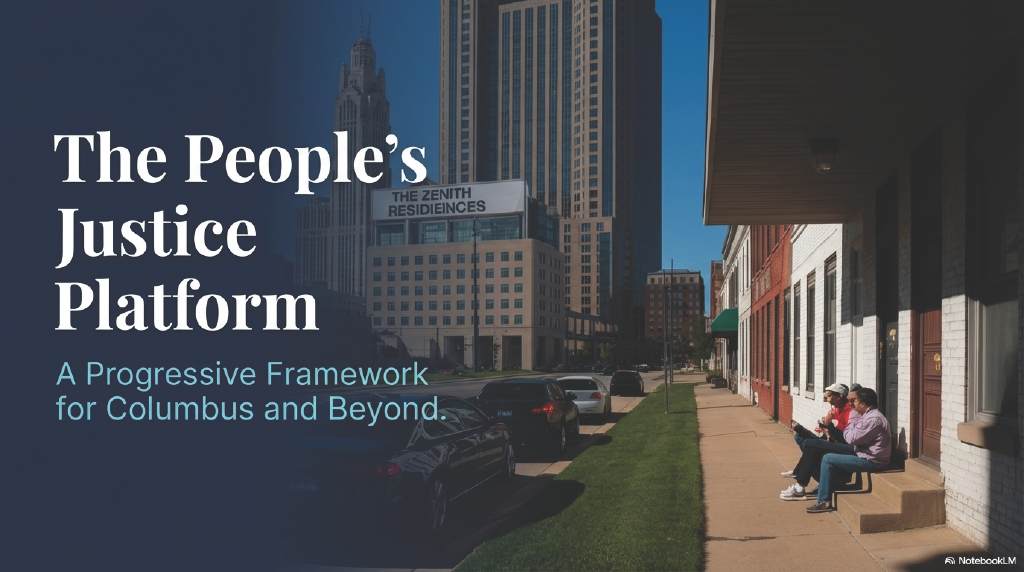

A Tale of Two Cities
On the surface, Columbus is a Midwestern success story. The skyline is expanding, luxury developments are rising in the urban core, and the city’s political leadership is more diverse than ever. Yet, beneath this veneer of progress lies a troubling disconnect. While the “new” Columbus prospers, the foundational systems intended to support its residents are fracturing. This is the “Columbus Paradox”: the city has achieved the political representation many fought decades for, yet the material conditions for its most vulnerable residents continue to decline.
“The People’s Justice Platform” is an urgent call to reconcile this gap. It serves as both a data-driven indictment of the status quo and a radical blueprint for a new model of governance. By analyzing the platform’s core takeaways, we can see how the machinery of the city has been set to “betrayal on autopilot,” built into the very gears of how Columbus operates.

The Proficiency Gap: When Representation Isn’t Enough
One of the most jarring failures in the city is found within the education system. According to 2023 data from the Ohio Department of Education, proficiency rates for Columbus City Schools (CCS) sit at a staggering 24% in math and 28% in reading. These numbers represent a generation of children being left behind by a system failing to provide basic competencies.
What makes this data particularly provocative is the political context: this failure persists under a majority Black school board. The platform argues that “faces in high places” have not translated into better outcomes for children.
“And so when schools fail and close in predominantly Black and poor neighborhoods while charter operators profit, we must have the courage to call it for what it is! This isn’t just failure — it is betrayal.”
This proficiency gap challenges the conventional wisdom that representation alone is the finish line. In Columbus, claiming to “understand the struggle” is meaningless if classrooms remain underfunded while private operators siphon off public resources.

The $30,000 Divide: The Shared Growth Myth
Economic growth in Columbus is real, but it is not equitable. A 2023 report by the Kirwan Institute for the Study of Race and Ethnicity reveals a city deeply divided by race and class. One in six residents lives below the poverty line, but for Black and Latino families, those rates are twice as high as the city average.
The most damning metric is the wealth gap: the median income for white households in Columbus is nearly $30,000 higher than that of Black households. While the downtown skyline expands and developers celebrate record profits, this “success story” feels written for someone else. The inequality is visible block by block, contrasting the luxury core with the struggle in neighborhoods like Linden, Hilltop, the South Side, and the Far East. For families in these areas, the “new” Columbus is a place where they fight for survival while their leaders approve developments that actively exclude them.
The $69 Million Subsidy: Financing the Housing Crisis
The housing crisis in Columbus is not an accident of the market; it is a matter of policy choice. Franklin County currently faces a massive shortfall in affordable housing, while public wealth is transferred to the private sector through aggressive tax abatements.
The human and systemic cost is clear:
- $69 Million: The estimated property tax revenue lost countywide in 2023 due to tax abatements for developers.
- 19%: The spike in eviction filings in Franklin County above pre-pandemic baselines as of March 2025.
- 54,000 Units: The current shortfall of affordable housing units facing the community.
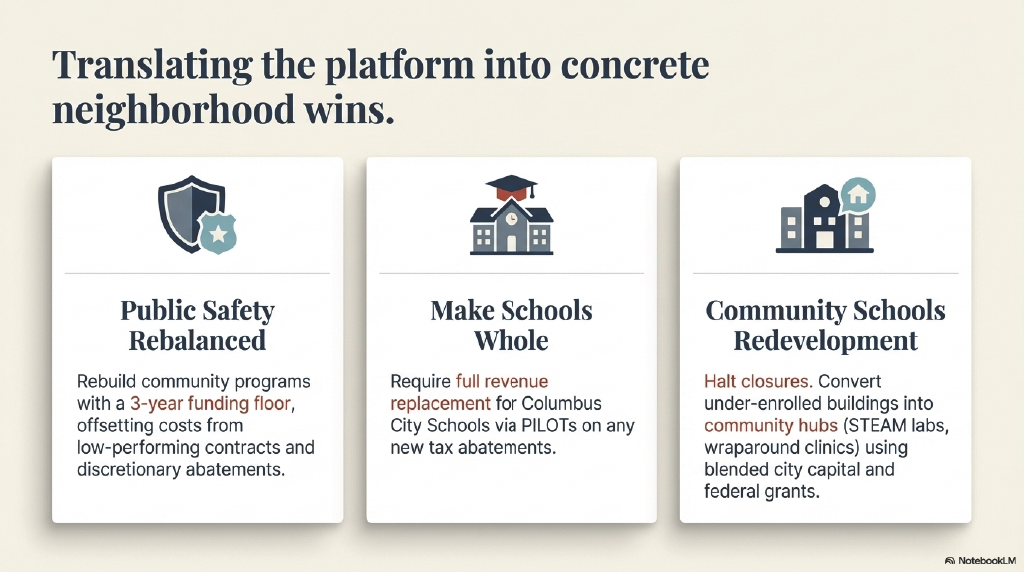
The betrayal here is circular. These abatements result in tens of millions annually in foregone school revenue. By siphoning funds away from Columbus City Schools to subsidize luxury apartments, policymakers are effectively financing the 24% math proficiency rates mentioned earlier. Leaders who come from these very communities are choosing the side of developers over residents, trading the dignity of a stable home for a boardroom extension of the donor class.
The $27 Million Disappearance: Redefining Public Safety
Public safety remains a flashpoint of systemic failure. The platform points to a disturbing budget shift: the city recently cut special programs within the public safety budget from $30 million down to just $3 million. Simultaneously, the overall police budget continues to increase, despite a history of violent and discriminatory policing.
To ground this policy in human history, we must remember the names that should have changed everything: Henry Green, Tyre King, and Ma’Khia Bryant. The platform argues that city leadership performs a cynical double-act. They use “two faces”—one to march in parades and post hashtags after tragedies, and another when the vote comes to side with the badge over the community.
“This is the Columbus paradox: we fought for representation, and now we have it. But representation without accountability has become a mask for exploitation. The people who look like us… are too often the ones signing away our futures.”
Representation-as-Coalition
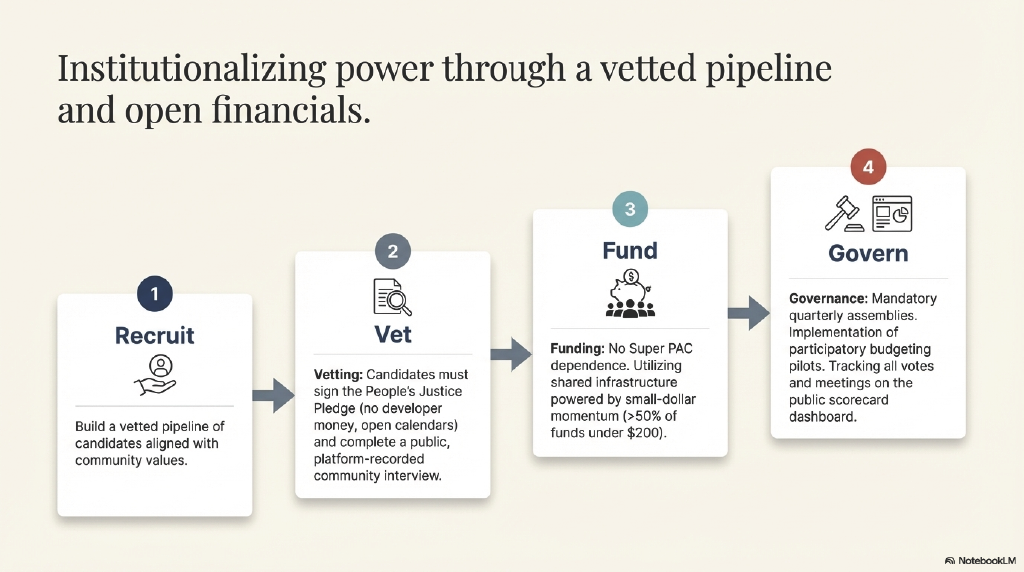
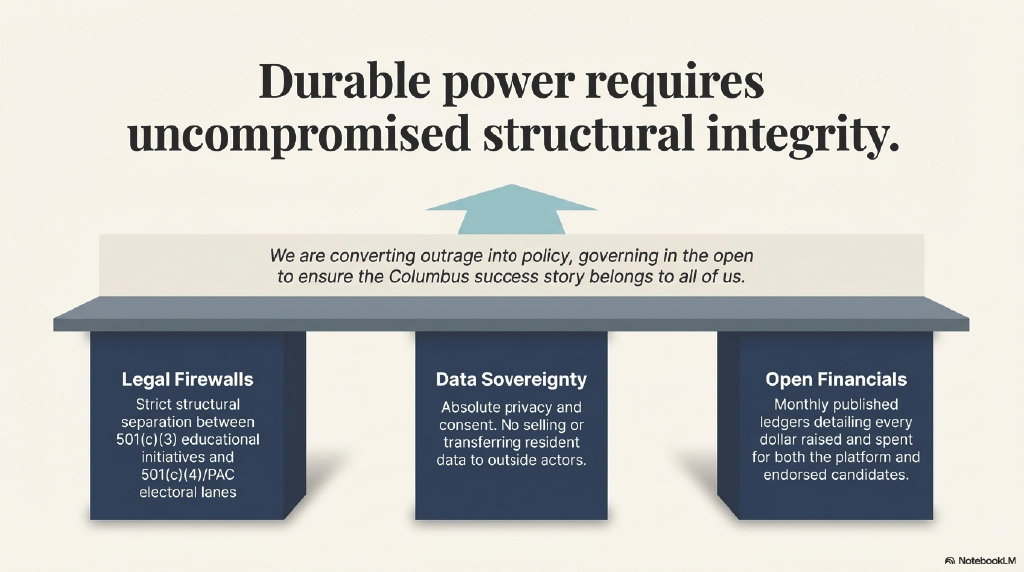
To solve the “Columbus Paradox,” the platform proposes moving away from traditional “party machinery” toward a model of Representation-as-Coalition. In this framework, elected officials are not independent power brokers but instruments of a progressive bloc anchored in three phases:
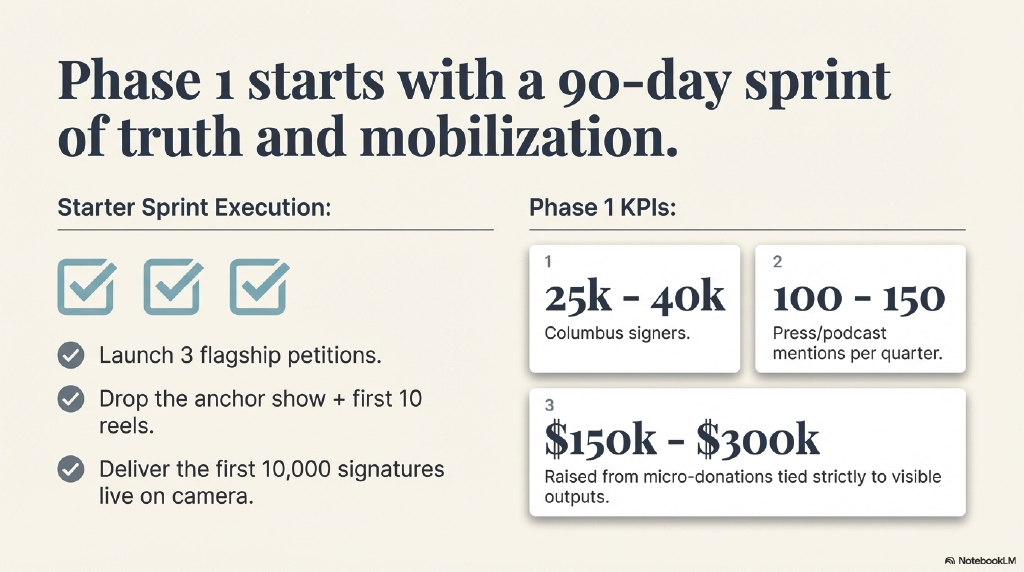
- Truth & Mobilization: Building public assemblies and seeding cross-sector leadership.
- Civil & Electoral Disruption: Using accountability tools to discipline the political class and fuel campaigns.
- Governance & Renewal: Institutionalizing this coalition governance within city council and school boards.
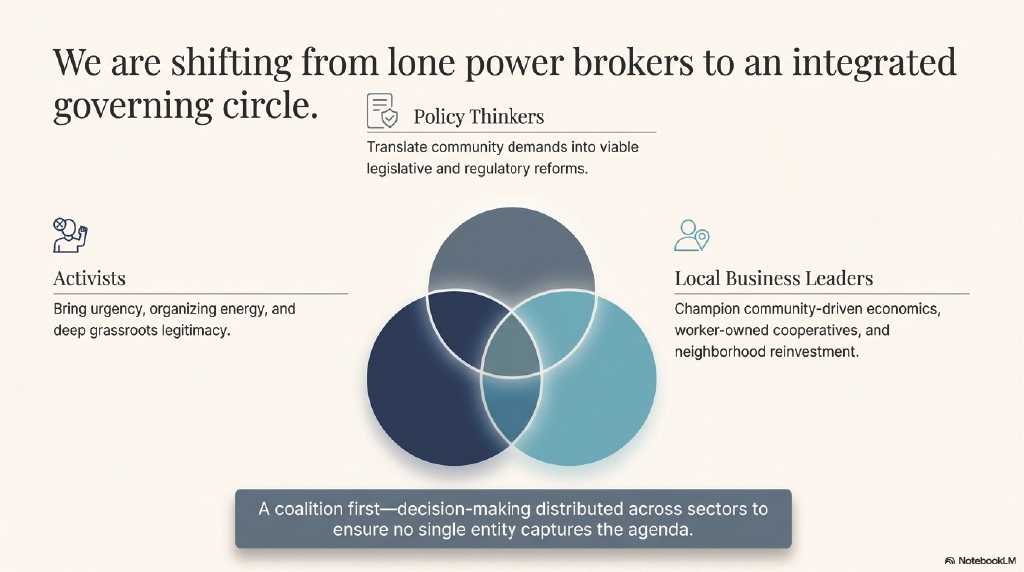
This model requires the Integration of Diverse Sectors to ensure no single interest captures the coalition:
- Activists: Bringing urgency, organizing energy, and grassroots legitimacy.
- Policy Thinkers: Translating community demands into viable legislative and regulatory reforms.
- Local Business Leaders: Championing worker-owned cooperatives and reinvestment into neighborhoods.
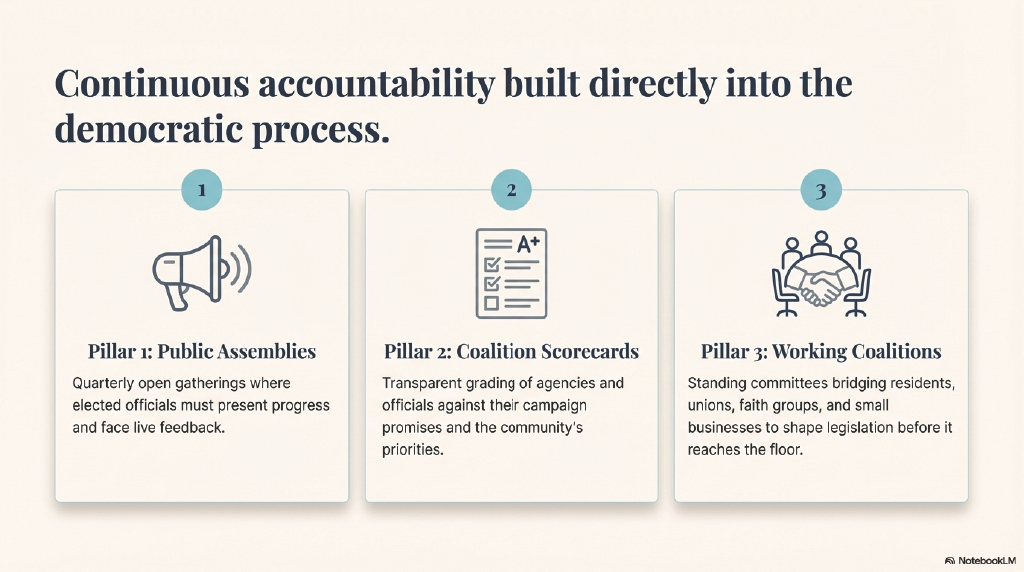
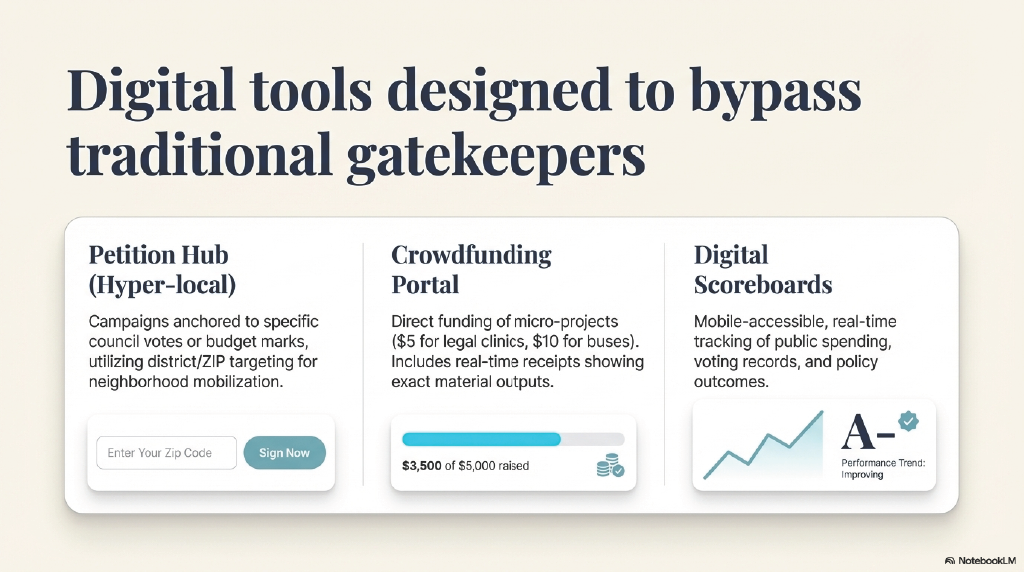
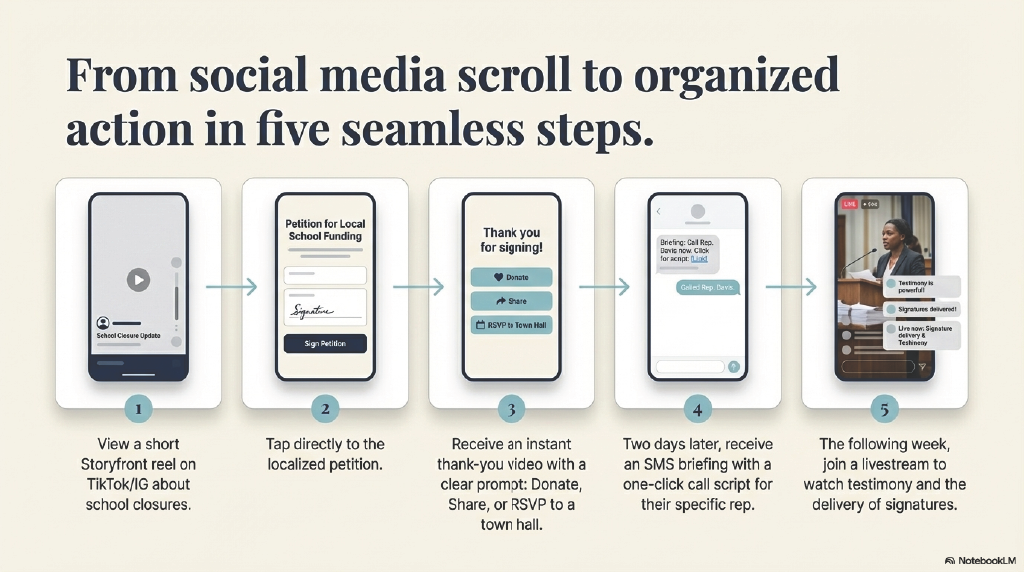
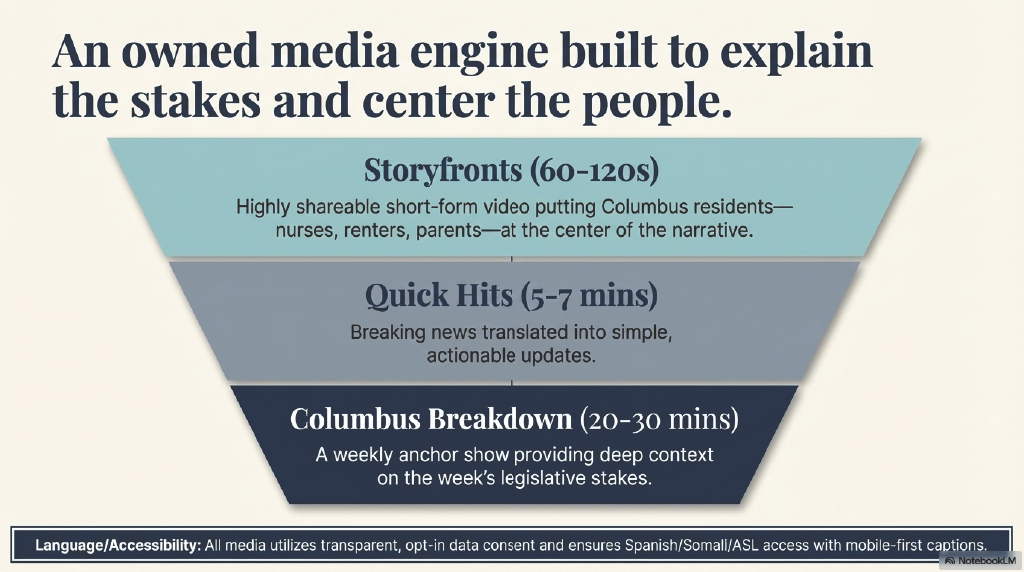
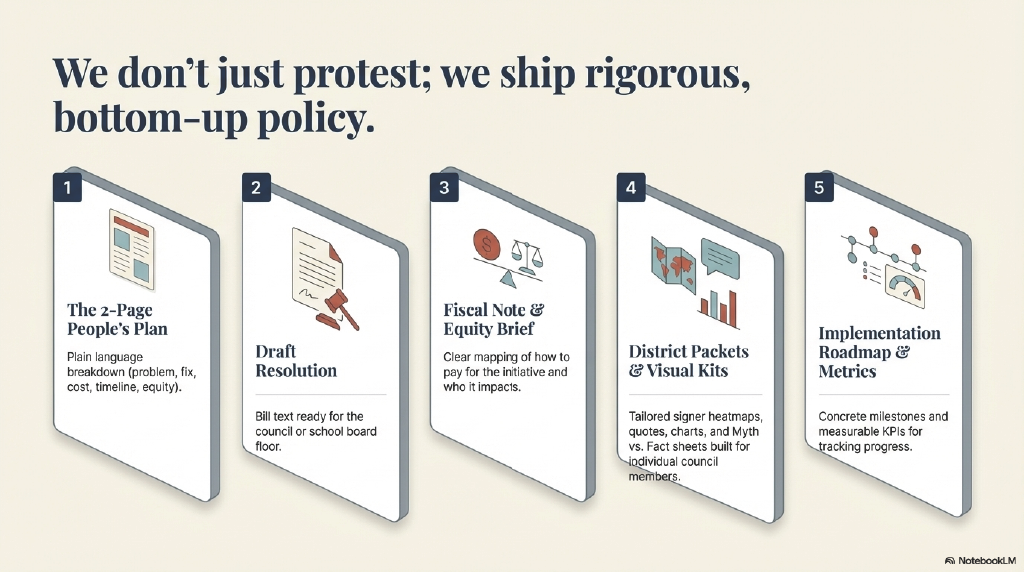
To scale this, the platform introduces high-tech accountability tools: a Petition Hub for hyper-local organizing, Public Scorecards to grade officials, Digital Scoreboards to track spending in real-time, and a Crowdfunding Portal that allows citizens to fund micro-projects directly, bypassing traditional gatekeepers.
Beyond the Ballot Box
The primary takeaway from “The People’s Justice Platform” is that representation without accountability is an autopilot for failure. In Columbus, the machinery of government has been allowed to spin in favor of the donor class, even as the faces of that government have changed.
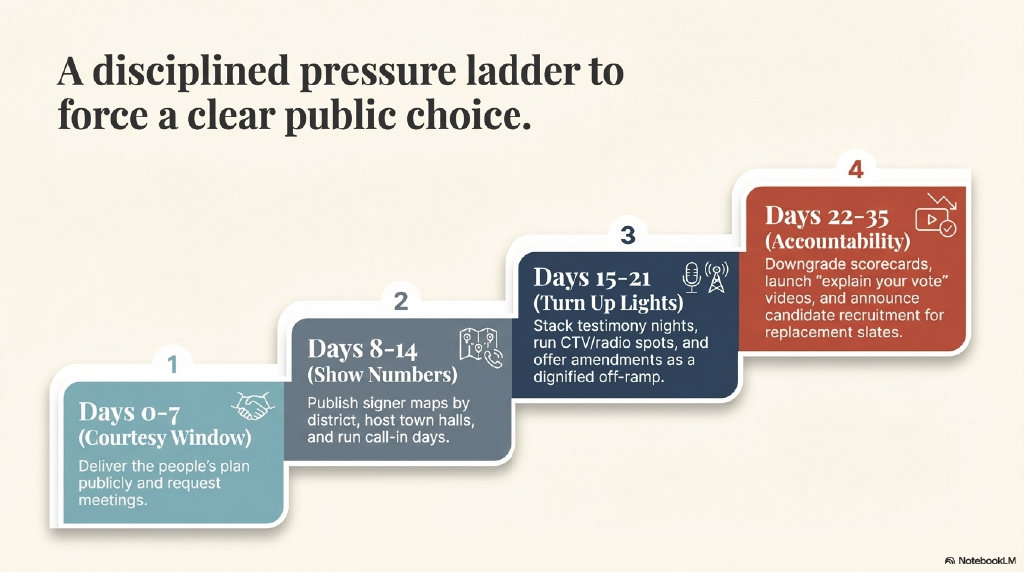
True change requires an escalation of pressure. The platform makes it clear: if leaders are stonewalled by the status quo, the coalition will recruit replacement slates to unseat them. It is not enough to win an election; the community must have the infrastructure to continually demand power.
What does true accountability look like in your own community? If your leaders look like you but don’t vote like you, the lesson of Columbus is clear: power must be continually negotiated and renewed by the people who created it, or it will eventually be sold to the highest bidder.